 Jackpots
 VIP Club
 Promotions

Soft 17 in Blackjack: Rules, Dealer Action and Strategy
One small rule difference between two blackjack tables can shift the house edge, and many casual players never notice it. The cards may look the same, yet one dealer’s rule can cost you more over time.
That rule tells the dealer what to do with a soft 17. If you know how this hand works, you can read a table faster and avoid a weak move. This guide explains what is soft 17, how S17 and H17 work, how the rule affects the house edge, and how you should play a soft 17 blackjack hand. Keep reading and find out how one small dealer rule can change your next blackjack decision.
What Is a Soft Hand in Blackjack?
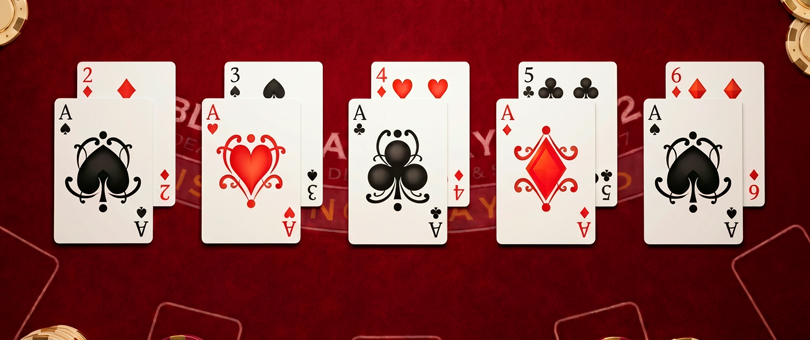
Before you can answer what is soft 17, you need to understand soft hands first. A soft hand has an Ace that counts as 11, provided that the total does not go over 21. Since the Ace can also count as 1, the hand has a built-in safety valve.
That safety matters because you can take one more card without risking an instant bust. If you have Ace-5 and draw a 10-value card, the Ace changes to 1, and your hand becomes hard 16 instead of 26. A soft hand gives you more room to act, so basic strategy treats it differently from a hard hand. Although both hands may show the same total, the Ace changes the correct move.
Soft Hands vs Hard Hands
A soft hand contains an Ace counted as 11. For example, Ace-4 counts as 15, and Ace-6 counts as 17. Because the Ace can move from 11 to 1, the hand can survive one more card. A hard hand has no Ace, or it has an Ace that counts as 1. For example, 10-7 is hard 17. Ace-6-10 is also a hard 17 because the Ace must count as 1.
Why the Ace Makes a Hand Soft
The Ace works like the hinge on the door. It can count as either 1 or 11, so your hand has more flexibility than with a fixed total. If you hold Ace-6 and take a 9, the Ace becomes 1, and your hand totals 16. That means a soft hand can improve before it becomes dangerous. Since blackjack rewards totals like 18, 19, 20, and 21, you should use that flexibility instead of freezing at 17.
What Is a Soft 17?
So, what is soft 17 in simple terms? A soft 17 is any blackjack hand worth 17 with an Ace counted as 11. Ace-6 is the most common example, but Ace-2-4 and Ace-3-3 also count as this hand. When players ask what is soft 17, they often picture only two cards. In real play, the hand can use three or more cards, as long as the Ace still counts as 11 and the total equals 17.
Here are easy examples:
- Ace-6 is a soft 17.
- Ace-2-4 is a soft 17.
- Ace-3-3 is a soft 17.
- Ace-Ace-5 is a soft 17 because one Ace counts as 11 and the other counts as 1.
A soft 17 blackjack hand feels better than a hard 17 because you can draw again with no instant bust. Even so, 17 remains a weak final total. Since many dealer totals end at 18, 19, 20, or 21, you usually need to improve it.
Dealer Rules: S17 vs H17
Once you know the hand, the next step is the dealer’s rule. The key phrase “h17 vs s17” tells you what happens when the dealer has the same total. The rule matters because the dealer does not choose freely. The table rules force the dealer to act. In blackjack, S17 means the dealer stands on all totals of 17, including soft 17. H17 means the dealer takes one more card on this total. Check the rule before you place a bet.
Stand on Soft 17 (S17)
S17 means “stand on soft 17.” Under this rule, the dealer stops after a total of 17, even if the hand contains an Ace counted as 11. For example, if the dealer has Ace-6, the dealer must stand. This rule helps players more than H17 because the dealer must keep a weak 17. Since 17 loses to 18, 19, 20, and 21, the dealer cannot try to improve that hand.
Hit on Soft 17 (H17)
H17 means the dealer must hit on soft 17. If the dealer has Ace-6, Ace-2-4, or another 17 with an Ace counted as 11, the dealer takes one more card.
At first, this may look good for players because the dealer can bust after the next card. Yet the dealer can also turn a weak 17 into 18, 19, 20, or 21. Over many hands, that extra card favors the house. This is why the dealer soft 17 rule matters. The dealer may bust more under H17, but the dealer also improves often enough for the casino to gain a higher edge.
How to Spot the Rule
You can usually spot the dealer soft 17 rule on the table felt. A player-friendly table may say “Dealer Stands on All 17s.” A less friendly table may say “Dealer Hits Soft 17.” In an online or live dealer game, check the rules panel before you place a bet. Many games place this detail inside an info menu, paytable, or rules tab.
For a quick rule check, ask yourself: h17 vs s17, which side does this game use? If the table says S17, the dealer stops. If the table says H17, the dealer draws.
How the Soft 17 Rule Affects the House Edge
The rule changes the house edge because it changes dealer action on one specific total. The H17 rule adds roughly 0.2% to the house edge compared to the S17 rule. That might sound tiny, but over a long session, it adds up in a real way.
The logic behind the gap is simple. Under H17, the dealer busts a little more often since they take extra cards on soft 17 hands. But the dealer also turns weak 17s into stronger totals often enough to more than cover those extra busts. The net result is a higher edge for the casino.
Since the dealer can go from a soft 17 to an 18, 19, 20, or 21 on a single card, hands that a player would have beaten at an S17 table end up as losses at an H17 table. That is the real cost of H17, and it is why S17 tables are better for you as a player.
How to Play Your Own Soft 17
Now let’s turn the tables around. The dealer rule tells you how the house acts, but your hand needs a different plan. Many players see 17 and stop, but that habit comes from hard hands. A soft total gives you another chance. If you ask what is soft 17 from a strategy view, the key point is simple: it is not a final hand. You should usually improve it because you can take one more card without an instant bust.
The Simple Rule
The simple rule is this: hit or double this hand, and do not just stand on it. If double down is not allowed, hit. If the dealer has a weak upcard and double down is allowed, double. This applies because 17 does not win enough as a final total. Since the Ace protects you from an instant bust on the next card, you lose value if you stop too early.
Doubling Down on Soft 17
You should double a soft 17 against a dealer 3 through 6 when the rules allow it. If the table does not allow that double, hit instead.
Why 3 through 6? Those dealer cards tend to create tough dealer totals, so the dealer has a higher chance of busting or ending with a weak hand. When you double, you place more money on a hand with a better chance to improve. For a quick memory note, use this soft-hand table:
| Your hand | Dealer card | Soft total | Best move |
| Ace-6 | 3 through 6 | Soft 17 | Double if allowed, otherwise hit. |
| Ace-6 | 2, 7, 8, 9, 10, or Ace | Soft 17 | Hit. |
| Ace-5 | 4 through 6 | Soft 16 | Double if allowed, otherwise hit. |
| Ace-7 | 3 through 6 | Soft 18 | Double if allowed, otherwise stand. |
| Ace-7 | 9, 10, or Ace | Soft 18 | Hit. |
Strategy Shifts Under H17
A few basic strategy moves change under H17. For example, in some multi-deck games, you double 11 against a dealer Ace when the dealer must hit on soft 17. Some early fold choices can also change.
For your soft hands, keep the main point clear. Soft 17 blackjack is not a hand to protect. You either hit on a soft 17 or double when the dealer’s card gives you a good chance. The phrase hit on soft 17 may feel risky at first, but the Ace gives you room for that move.
The h17 vs s17 rule also tells you which strategy chart to use. If the table uses H17, use an H17 chart. If the table uses S17, use an S17 chart. This keeps your choices tied to the actual game rather than to a general habit.
Soft 17 in Different Blackjack Variations
The dealer soft 17 rule does not stay the same across all blackjack games. Depending on the table and the variation, you will find H17 in some places and S17 in others.
Many low-minimum tables in Las Vegas, as well as most European-style blackjack games, use H17. Since low-minimum tables already cut margins tighter, the casino often adds H17 to recover some edge. European blackjack, by design, tends to favor the house in a few areas of the rules, and H17 is one of them.
Higher-limit tables and games in the United Kingdom more often use S17. Because these tables attract players who know basic strategy and expect better odds, the rule set tends to be more player-friendly overall.
Online soft 17 blackjack games vary by provider. Some use H17, some use S17, and a few let you switch between rule sets depending on the table you select. Always check the rules panel before you start. If you play live dealer blackjack, the rules are usually listed in the game interface before you join a table.
How to Find Player-Friendly Soft 17 Tables
Since the dealer soft 17 rule directly affects your odds, you want to find tables that use S17 whenever you can. Here is how to do that in practice.
Look for the phrase “Dealer Stands on All 17s” on the table felt or in the game information. If you see “Dealer Hits Soft 17,” the table runs H17. That is not a reason to walk away, but it means you should factor that 0.2% extra house edge into your session expectations.
In online and live dealer games, check the rules panel before you place your first bet. Most platforms display the full ruleset, including the dealer soft 17 rule, right there in the interface.
Once you find an S17 table, pair it with other favorable rules. Fewer decks reduce the house edge further, so a single-deck or double-deck S17 game is better than a six-deck H17 game. A 3 to 2 payout on blackjack is also a big one: tables that pay only 6 to 5 give the casino a much larger edge regardless of the soft 17 rule. When you combine S17 with fewer decks and a 3-to-2 payout, you get the best conditions for basic strategy to work.
If you play at an online casino, this check only takes a minute. Open the rules panel, check the dealer action, review the payout, and then decide if the table is worth your bankroll.
Common Soft 17 Mistakes
Even if players understand soft 17 blackjack in theory, they can still make avoidable errors at the table. These are the three that come up most often.
When you stay on a soft 17 instead of a hit or double down, you give up a better chance to improve. This is the biggest mistake because many players see 17 and assume the hand is good enough to keep. But a soft 17 is not the same as a hard 17. Since you can take another card and still avoid 21 in many cases, you should hit or double down when the rules allow it.
If you play a soft 17 like a hard 17, you miss better moves. A hard 17 gives you little room because any card above 4 sends you over 21. But a soft 17 gives you a safety net, so the same move does not always make sense. If you play both hands the same way, you miss many good moves, such as double-down chances against dealer up-cards of 3 through 6.
Before you choose a table, check the dealer soft 17 rule. If you choose an H17 table and play as if the rules are S17, your strategy can be slightly off in a few key spots. So always confirm the rule before you bet, and adjust your play based on the table.
Play Blackjack at Spinarium
If you want to put this strategy to use right away, Spinarium has a full selection of table games that includes multiple blackjack variants. Before you start any session, check the table rules to see if the dealer’s soft 17 rule is in play. The info panel in each game will tell you exactly how the dealer acts on soft hands.
We also offer free casino games so you can practice your soft 17 decisions before you play with real money. That is one of the best ways to get comfortable with the strategy table and build confidence in your moves. Once you feel ready, head over to the full range of casino games and apply what you have learned.
You can also read our blog for more blackjack strategy guides, game breakdowns, and tips across all the major table game formats.
FAQ About Soft 17
You should hit or double a soft 17, and you should not simply stand on it. If the dealer has 3 through 6 and the rules allow a double, double down. If not, hit. Since the Ace can count as 1 or 11, your next card cannot bust the hand right away.
Some casinos use the hit on soft 17 rule because it gives the house a slightly higher edge. The dealer may bust more often after the extra card, but the dealer also improves a weak 17 often enough to gain more value over time.
H17 means the dealer hits a soft 17. S17 means the dealer stands on it. In the h17 vs s17 choice, S17 helps players more because the dealer must stop on a weak 17 instead of trying for a stronger total.
A soft 17 is better than a hard 17 because it has flexibility, but it is still weak as a final total. Since you can hit it with no instant bust risk, you should usually try to improve it instead of standing.
The rule itself stays the same, though its exact effect on the house edge shifts slightly with the number of decks. In general, more decks combined with H17 push the house edge a bit higher, so fewer decks and S17 together give you the best conditions.